

 InfoSearched
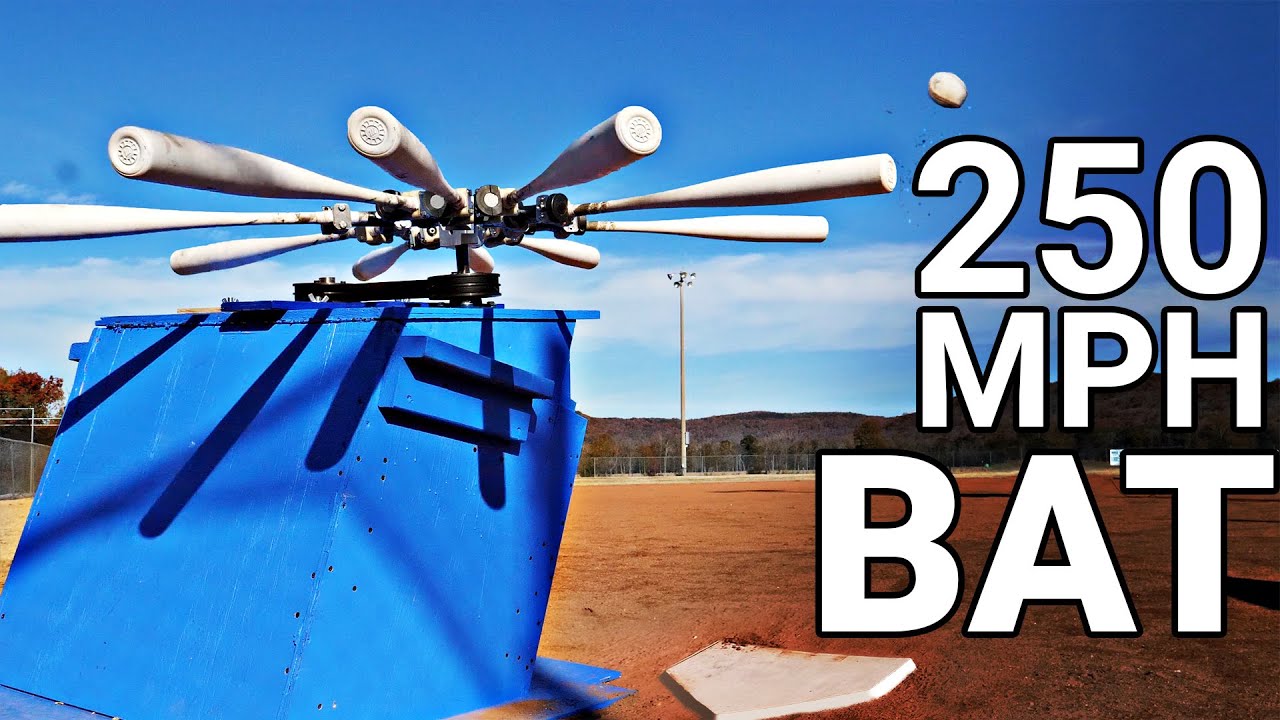
Destin Sandlin of the YouTube series Smarter Every Day pushes the boundaries of physics with a mechanical device engineered to redefine the limits of the long ball.
In January 2020, Destin Sandlin debuted the “Mad Batter,” a custom-engineered machine designed to challenge the historical benchmarks of baseball’s longest home runs. The project aims to surpass legendary records, including Babe Ruth’s 1921 blast—estimated between 575 and 650 feet—and the 582-foot shot hit by Joey Meyer in 1987, which remains the longest verified home run in professional baseball history.
- The machine utilizes a high-speed rotating assembly, powered by a generator, to swing two full-sized bats at approximately 250 mph.
- Sandlin, a missile flight test engineer at Redstone Arsenal, applies ballistics principles to isolate how launch angle and backspin influence distance.
- High-velocity impacts during testing resulted in the destruction of multiple wooden and aluminum bats.
The Engineering Mechanics
The “Mad Batter” is engineered to maximize kinetic energy transfer to a standard baseball, a feat impossible for human athletes. The machine features two full-sized bats mounted to a central axis that rotates at speeds reaching 250 mph. Because the device treats the baseball as a projectile, Sandlin focused on optimizing the mechanical variables of the impact to push past the 600-foot mark. Achieving this required precise timing to ensure the baseball dropped into the path of the bats for a perfect collision.
The force of impact at such high velocities resulted in the destruction of multiple bats, including shattered wooden models and compromised aluminum bats.
The Limits of Structural Integrity
Sandlin’s background as a missile flight test engineer proved essential when the machine’s power led to repeated mechanical failures. The centrifugal force required to swing a bat at 250 mph exerted extreme stress on the equipment, causing multiple wooden models to shatter upon contact and aluminum bats to deform. These failures forced the team to continuously iterate on their materials and balancing techniques to ensure the assembly could withstand the G-forces generated during the swing.
Historical Benchmarks
The project serves as a bridge between high-level mechanical engineering and the storied history of professional baseball. By benchmarking against the 582-foot professional record set by Meyer at Mile High Stadium and the legendary estimates surrounding Ruth, the experiment creates a rigorous test of how far a ball can travel under optimal mechanical conditions. This approach provides empirical context to home run distance, removing human error from the equation to determine the absolute physical potential of the projectile.
Following the successful launch of a ball 717 feet over the scoreboard at Joe Davis Stadium, Sandlin now faces the challenge of tuning the rig to maintain structural integrity as he searches for a material capable of surviving impacts at even higher rotational velocities.








Freddie Freeman HILARIOUS Mic’d Up during Braves-Red Sox
Deontay Wilder vs Tyson Fury 2 – A CLOSER LOOK
Every Slam Finish in UFC History
World’s Longest Home Run (The “Mad Batter” Machine)
Myanmar’s Lethwei – the most brutal combat sport in the world?