

 InfoSearched
U.S. Soccer just dropped a financial bombshell into its own equal pay fight with the women’s national team.
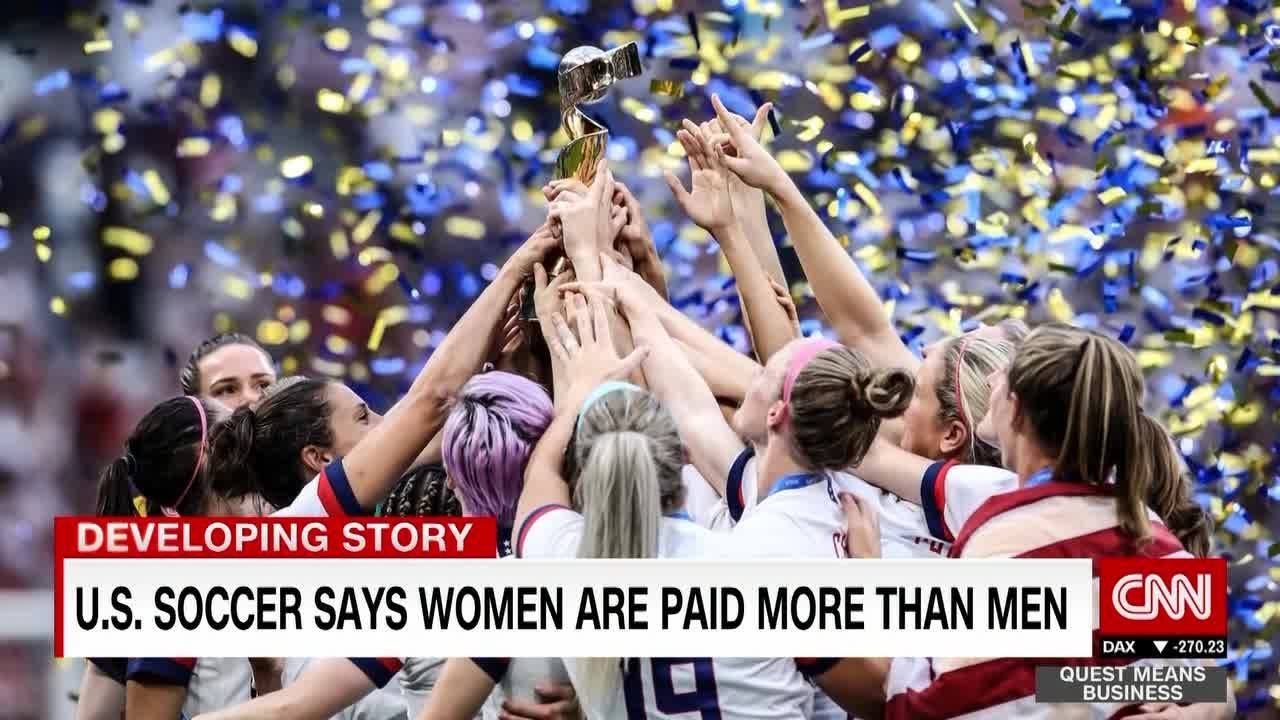
Nine days after the USWNT lifted its second consecutive World Cup trophy in France, and with fans still chanting “Equal Pay” at the victory parade down Manhattan’s Canyon of Heroes, U.S. Soccer Federation President Carlos Cordeiro released a four-page fact sheet on July 29, 2019, arguing the women’s team has actually been paid more than the men’s team over the last decade. The timing wasn’t accidental — it landed just as the federation and the 28 USWNT players suing it for gender discrimination were preparing to sit down for federal mediation. The move immediately drew fire from the players’ side, setting up a numbers war over what “equal pay” even means.
- USSF says it paid the USWNT $34.1 million in salaries and game bonuses between 2010 and 2018, compared to $26.4 million paid to the USMNT.
- The federation claims that from 2009 to 2019, the men generated $185.7 million in revenue over 191 games, while the women generated $101.3 million over 238 games.
- USWNT spokesperson Molly Levinson called the figures “utterly false” and a “ruse,” arguing they’re inflated by folding in NWSL club salaries.
Two Very Different Contracts
Cordeiro’s entire argument hinges on the fact that the men’s and women’s teams negotiated separate Collective Bargaining Agreements built around different priorities. The USWNT deal guarantees players base salaries plus benefits like health insurance and maternity leave — protections the men’s union never asked for. The USMNT, by contrast, operates on a “pay-for-play” model, where compensation is tied almost entirely to camp call-ups and performance bonuses tied to matches and results.
That structural gap is exactly why U.S. Soccer says a straight dollar-for-dollar comparison misses the point: the women chose stability and benefits, the men chose upside tied to appearances. Cordeiro’s letter leaned on the raw totals — $34.1 million to $26.4 million — to argue the women’s choice actually paid off financially, even while the men’s team out-earned the federation nearly two-to-one in revenue on far fewer games played.
The Players Push Back
The USWNT’s camp wasted no time dismantling the framing. Levinson argued the USSF is only able to reach that $34.1 million figure by counting salaries the federation pays to women’s players through their NWSL clubs — money that has nothing to do with representing the national team on the field. Strip that out, the players’ side says, and the real comparison flips.
Levinson called the USSF’s numbers a “ruse” and “fuzzy math” designed to distract from a lawsuit built on the claim that the women earn less for equal — or better — work.
The players’ legal team wants what they call an “apples-to-apples” look at game bonuses specifically, which they say shows the men earning considerably more for comparable outcomes. They also point to the gap in FIFA World Cup prize money — money the federation doesn’t control but that still shapes how much each team ultimately takes home from international soccer’s biggest event, a sore point that’s dogged the sport well beyond this dispute, as covered in coverage across soccer.
The Significance of Proper Timing
None of this is happening in a vacuum. The 28 players filed their gender discrimination lawsuit in March 2019, months before the World Cup even kicked off, and the dispute has only gained more attention since the team’s run through France ended with a trophy and a chorus of “Equal Pay” chants inside the stadium itself. Releasing a fact sheet just before mediation reads as U.S. Soccer trying to control the narrative before lawyers and a mediator take over the conversation.
The federation’s framing — guaranteed salaries and benefits versus pay-for-play — is the same argument it’s likely to make formally once mediation begins. Whether that argument holds up depends entirely on which numbers get counted: total compensation, as Cordeiro wants, or bonus-for-bonus, game-for-game, as the players are demanding. That fight over methodology, not the mediation date itself, is what’s actually going to decide whether this settles quietly or ends up back in federal court.






MLB Showing Up the Umpires
Floyd Mayweather vs Logan Paul: Fight goes the distance [Highlights, recap]
“F**K THAT SH*T” – GEORGE KAMBOSOS WARNS GERVONTA DAVIS ABOUT UPSET; KEEPS IT 100 ON “PROTECT THE 0”
Who can take the pain? 30kg HAMMER HOLD
The Tragic Death Of ‘Macho Man’ Randy Savage