

 InfoSearched
The standing guillotine remains one of the most visually devastating ways to secure a finish inside the Octagon.
Few techniques in mixed martial arts offer the immediate, visceral impact of the standing guillotine. By trapping an opponent’s neck against the fence or in open space, elite submission artists can render an opponent unconscious or force a tap before the grappling ever reaches the mat.
- Jon Jones famously defended his Light Heavyweight title at UFC 140 by using a vice-like grip to put Lyoto Machida to sleep at 4:26 of the second round.
- Tito Ortiz ended a five-year winless streak at UFC 132 by rocking Ryan Bader with a punch before securing a standing guillotine finish at 1:56 of the first round.
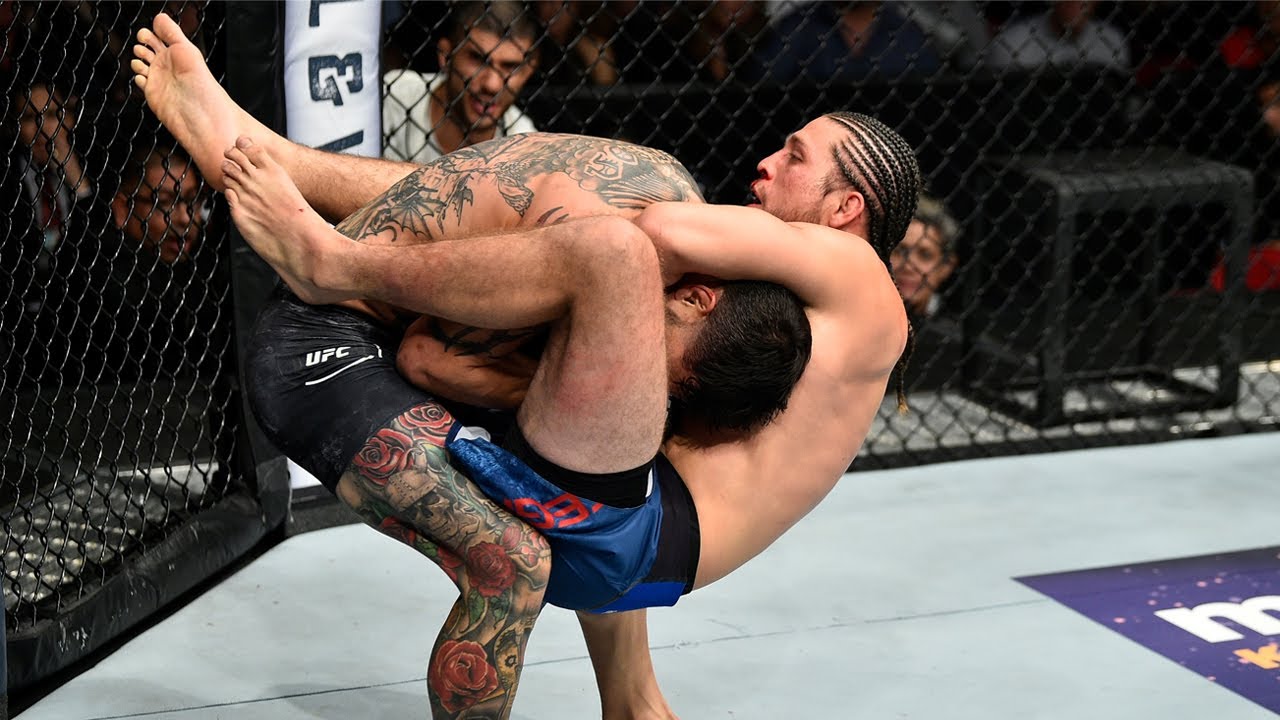
- Brian Ortega showcased technical mastery at UFC Fight Night 123, jumping into the air against the fence to readjust his grip and submit Cub Swanson at 3:22 of the second round.
The Strategic Mechanics of the Hold
The standing guillotine relies on leverage and precise body positioning, often turning an opponent’s forward momentum against them. Fighters frequently utilize the cage wall to prevent the trapped athlete from rotating or dropping their weight to escape. This use of the fence as a fulcrum allows the attacker to apply maximum upward pressure on the carotid artery, securing the submission while maintaining a vertical base.
The image of Jon Jones releasing the hold and Lyoto Machida slumping face-first to the canvas became a staple of UFC promotional material.
Historical Development and Records
The maneuver has been a fixture of the promotion since its infancy, with early records highlighting its efficiency. At UFC 6 in 1995, Oleg Taktarov recorded a nine-second submission victory over Anthony Macias, a result that stood for decades as the fastest tap-out in promotional history. In the modern era, the technique remains a primary weapon for submission specialists. Charles Oliveira furthered his record-breaking tally of promotional submissions at UFC Fight Night 144 in February 2019, utilizing the choke to finish David Teymur.
High-Stakes Finishers
The technical demands of the standing guillotine ensure it remains a high-risk, high-reward move. When executed properly, it minimizes the duration of the engagement, protecting the attacker from potential counter-striking while forcing an instant conclusion. Whether applied through a jumping motion or a clinch-based trap, the standing guillotine continues to be a defining test of grappling acumen for fighters competing in the UFC.
Submission experts like Oliveira continue to hunt for the neck in every clinch, a constant threat that forces opponents to abandon their wrestling takedown attempts the moment they feel the UFC cage fence digging into their shoulders.



US Women’s football team calls for pay equality
Every Slam Finish in UFC History
Crazy Heavyweight Exclusive! Gonzaga vs. “Big Foot” Silva – BKFC 8
“I FEEL SORRY FOR WILDER” – ROY JONES JR. AS REAL AS IT GETS ON FURY STOPPING WILDER & EXCUSES MADE
Is Terrance Crawford vs Canello Alvarez happening?