

 InfoSearched
The Manassa Mauler remains the foundational blueprint for Mike Tyson’s legendary ring aggression.
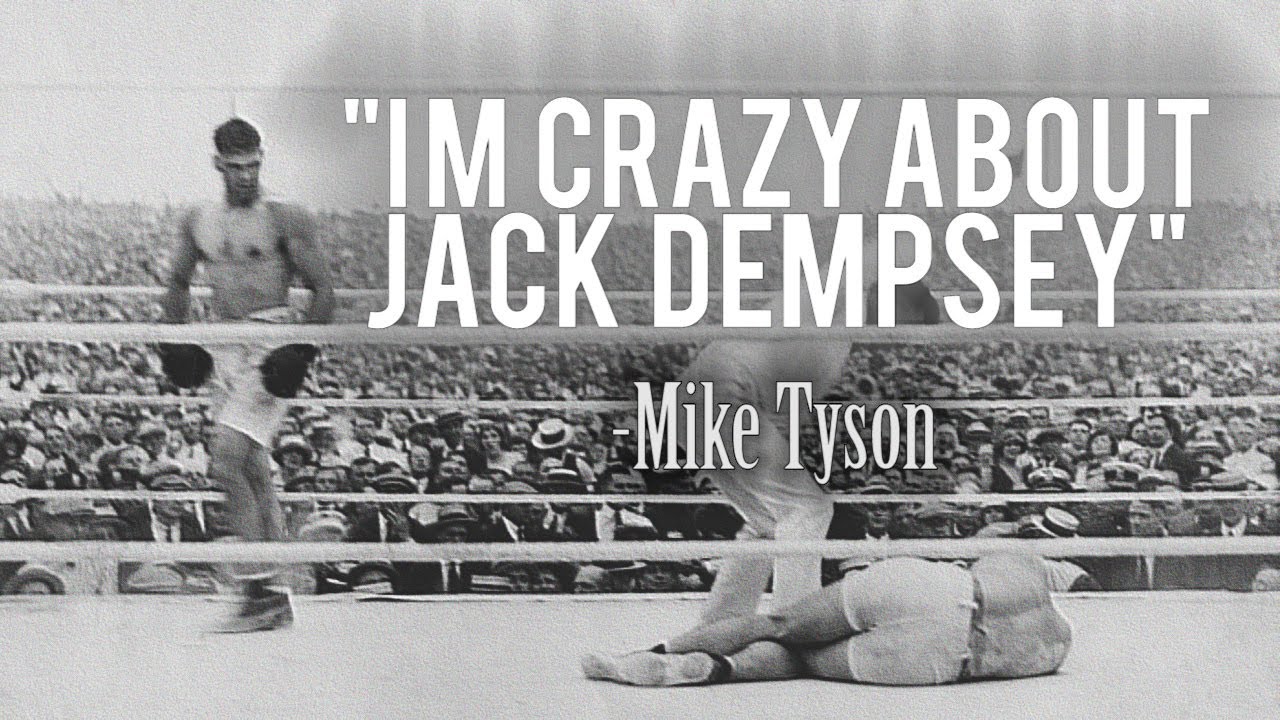
Born William Harrison Dempsey in 1895, Jack Dempsey held the world heavyweight title from 1919 to 1926, establishing a template of relentless violence that would define the sport for generations. His influence was not merely an inspiration; it was a mandatory curriculum imposed by trainer Cus D’Amato, who required a young Mike Tyson to study film of the heavyweight icon every night to internalize his technique and intent.
- Dempsey’s 1919 title victory over Jess Willard—where he dropped the significantly larger champion seven times in the first round—provided the primary study for the explosive, sustained offensive pressure that became the hallmark of Tyson’s own rise.
- Dempsey pioneered the archetype of the “box-office magnet,” earning $1.7 million in his 1921 defense against Georges Carpentier before a record crowd of 91,000, setting a commercial standard for heavyweights that Tyson would later dominate.
The Anatomy of an Aggressor
Dempsey’s style relied on a constant bobbing and weaving motion coupled with a refusal to let an opponent reset. For Tyson, the study of the “Manassa Mauler” transcended tactical mechanics, focusing on the psychological commitment to physical destruction. According to Tyson, while many legends fought for the decision or the win, Dempsey specifically fought to shatter his opponents’ frames.
He wanted to shatter your eye socket, destroy your cheeks, your chinbone.
The 1919 bout against Willard remains the most illustrative example of this intensity. Beyond the seven knockdowns in the opening three minutes, Dempsey inflicted a broken jaw, broken ribs, and a shattered cheekbone on the defending champion. Tyson’s immersion in this era was so thorough that he personally researched historical controversies, including the persistent theory that Dempsey utilized “loaded” gloves to secure the damage dealt to Willard.
Commercial and Stylistic Legacy
Dempsey provided the blueprint for the heavyweight champion as a massive financial draw. By becoming the first fighter to generate a million-dollar gate, he elevated the sport’s profile, creating a path for the multimillion-dollar boxing and MMA industries of the future. The sheer commercial scale of his 1921 fight against Carpentier turned the championship into a global sporting event, a precedent for the spectacles Tyson would eventually headline in the 1980s and 90s.
The Persistent Influence
Tyson has frequently pointed to these historical archives when describing the origins of his own predatory movement. The mechanics taught by D’Amato, rooted in those grainy 1920s fight films, remain the core of Tyson’s technical philosophy. Even as the sport evolved through the decades, the fundamental logic remains unchanged: constant forward pressure and the relentless intent to finish the fight.
As Mike Tyson prepares to return to the ring for an exhibition matchup, he continues to emphasize that his training regimen relies on the same peek-a-boo fundamentals and aggressive inside-fighting philosophy that Dempsey utilized to end his career with 51 knockouts.









UFC 249: Fight Motion
Wing Chun in MMA / UFC – (Tony Ferguson, Anderson Silva, Jon Jones)
“I FEEL SORRY FOR WILDER” – ROY JONES JR. AS REAL AS IT GETS ON FURY STOPPING WILDER & EXCUSES MADE
Kobe Bryant Dies In Helicopter Crash In California | NBC News
Michael Andrew sets AMERICAN RECORD in 100m breaststroke at Olympic trials